SKHY Options: The Biggest Trades Leaned Bearish
SKHY options arrived with explosive volatility, surprising bearish positioning, and a market pricing in massive moves. See what the data reveals and how traders are responding.

At a Glance
- Largest opening trades leaned bearish, with LiveVol classifying the seven biggest option prints as bearish despite strong overall activity.
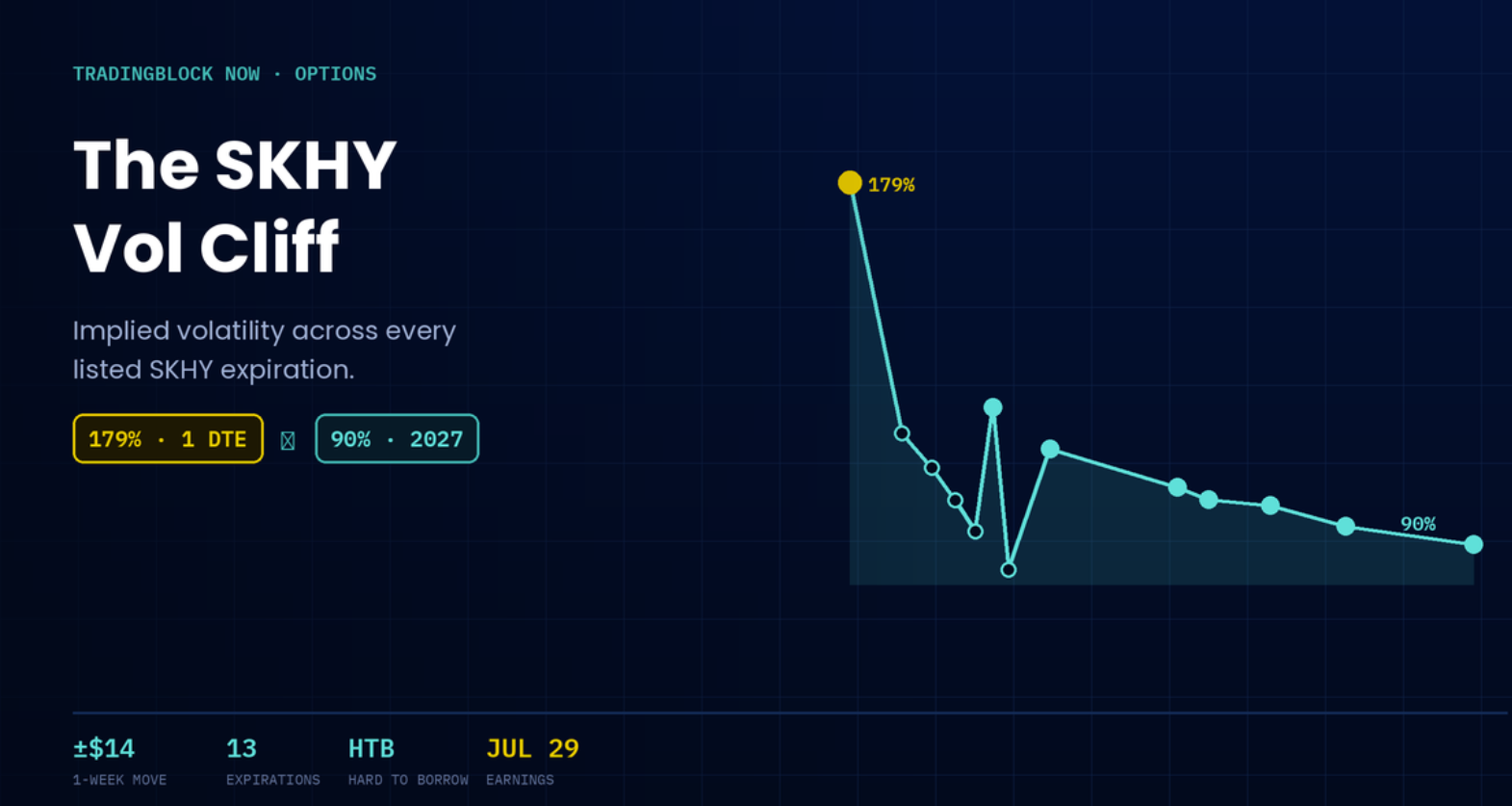
- The volatility curve was sharply inverted, with front-week ATM IV near 179% before dropping below 100% in later weeklies.
- Downside protection carried a steep premium, as near-term put implied volatility climbed dramatically at lower strikes while longer-dated skew stayed relatively flat.
SK Hynix options began trading Tuesday, and the opening session looked very different from what many expected. Rather than a wave of speculative call buying, Cboe LiveVol data cited by CNBC showed the most active directional flow was call selling, with the seven largest option prints of the session all classified as bearish. The biggest appeared to be the sale of more than 2,200 July 17 $180 calls at roughly $9 each, representing about $2 million in premium collected.
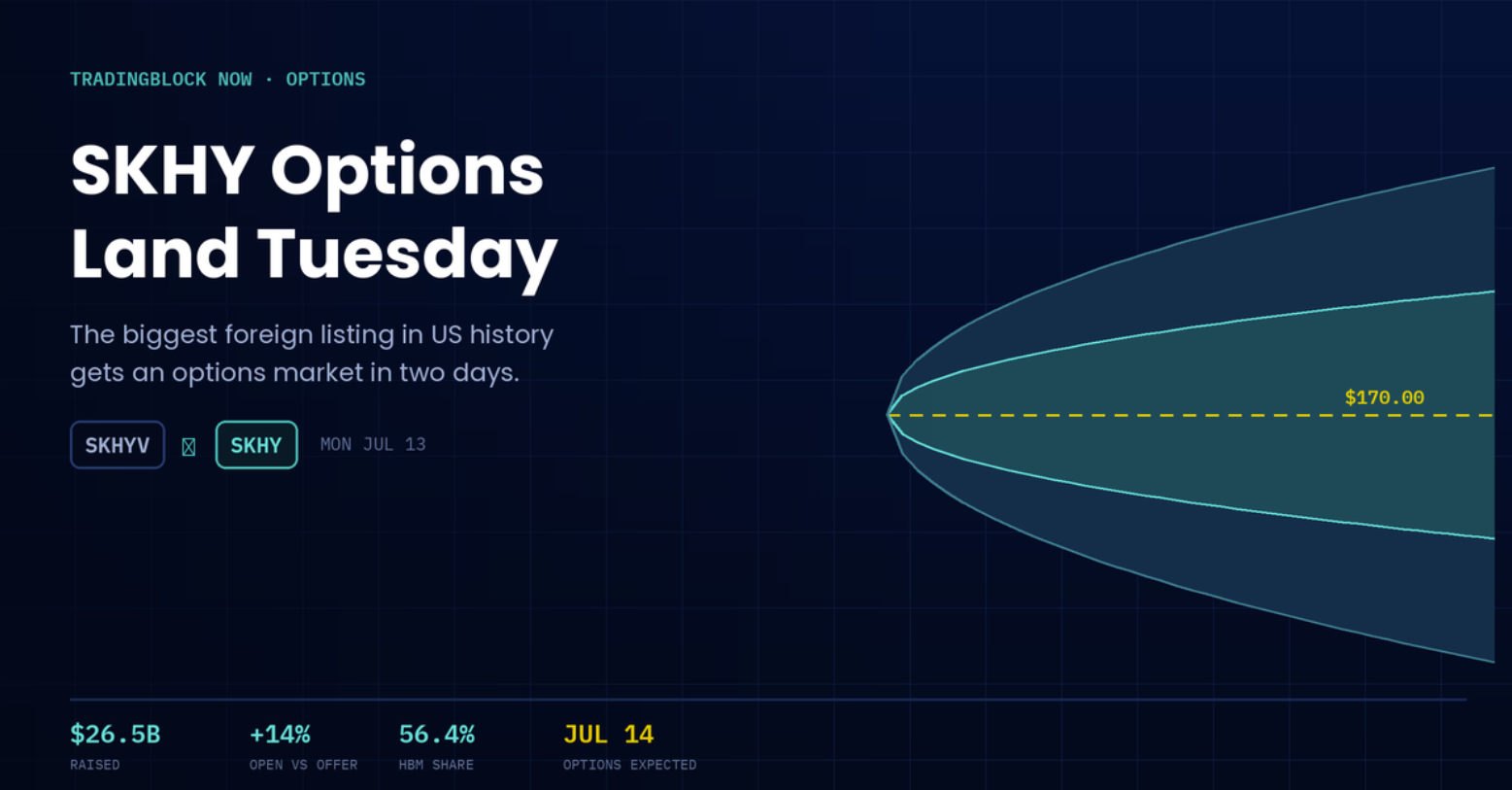
The stock has been a ride. Priced at $149, the ADRs opened at $170, surged more than 20% Tuesday as options and leveraged ETFs went live, then reversed hard. SKHY traded near $163 Thursday afternoon after Seoul closed 11.5% lower in an Asian chip rout, roughly 15% off Tuesday's close in two sessions. The bulls have not gone quiet: Barclays initiated at Overweight this week.
Five Weeklies, Two Days In
Volume was solid rather than spectacular. CNBC counted about 150,000 contracts by midday Tuesday, more than the VanEck Semiconductor ETF but under a third of Micron's, and the full session finished north of 218,000 by other counts. One explanation for the muted call buying: a dozen leveraged single-stock ETFs launched the same day and absorbed much of the speculative flow. Desks expected weeklies to be the next catalyst. They arrived fast, five of them, July 24 through August 28, hitting the board Thursday morning.
The Vol Cliff
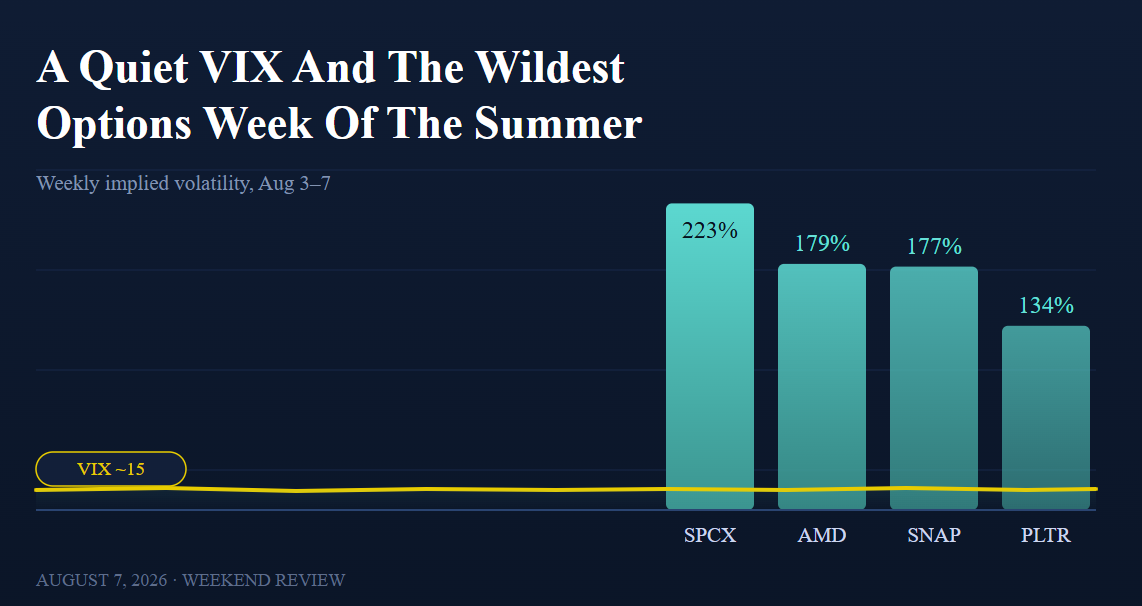
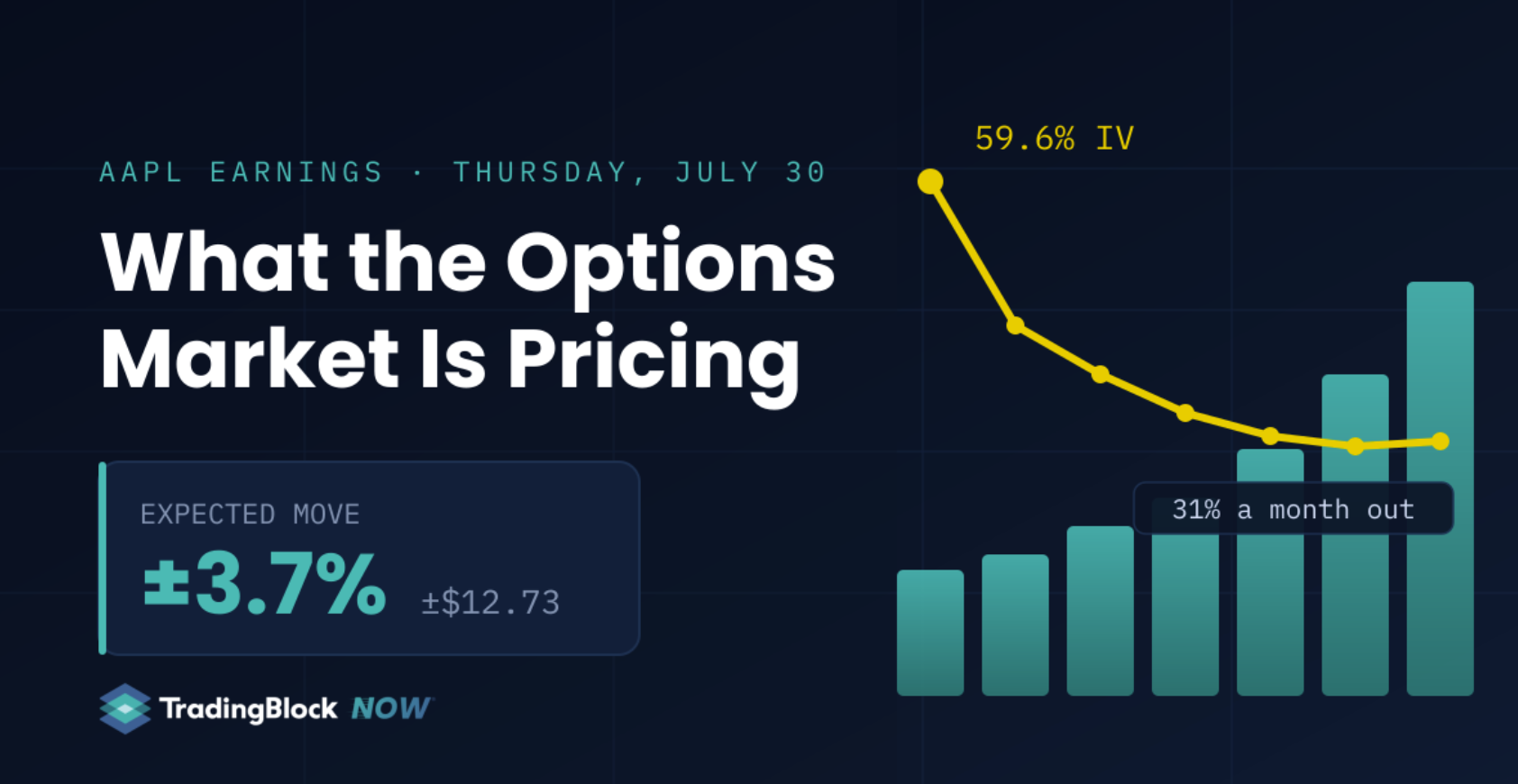
We pulled ATM implied volatility for every listed SKHY expiration from the TradingBlock platform Thursday, hours after the weeklies listed, with the stock near $165. The front contract, then one day from expiration, quoted 179%, a ±$14 expected move into Friday's close. From there the curve falls off a cliff: the new weeklies priced the coming weeks between 93% and 117%, September near 113%, December near 104%, fading toward 90% by the end of 2027.
TradingBlock Now · Interactive
The SKHY Vol Cliff
ATM implied volatility across the SKHY board, snapshotted July 16, hours after five weekly expirations listed. Hollow points are the new weeklies. Tap any point for detail.
Source: TradingBlock platform, midday July 16, 2026, SKHY near $165. Hollow points are weeklies listed July 16; those markets are hours old, so quotes are thin and the kinks around the August monthly reflect that. ATM implied volatility and ±1 standard deviation expected move per expiration. Snapshot only; live values change constantly. Not a forecast or a recommendation. Options involve risk and are not suitable for all investors.
A curve sloping down this steeply has a name: backwardation. Near-dated contracts price higher implied volatility than longer-dated ones, which means lower future implied volatility is already built into the further expirations. If implied volatility falls that way in practice, long premium positions face a second headwind on top of direction. IV crush is what traders call that, and it means a call can be right on direction and still lose if volatility drops enough. SpaceX offers a recent parallel. Implied volatility on its options fell from near 160% at launch toward 110%, and as vega worked against long positions, many buyers on both sides of the market saw premiums decline even when the stock moved their way. Outcomes still varied by strike, expiration, and timing.
Earnings Are Now on the Board
SK hynix confirmed its second-quarter results call for July 29 in Seoul, the evening of July 28 in US markets. That makes the July 31 weekly the first expiration to capture the print, making the new weeklies more relevant. In Thursday's snapshot the August 14 weekly quoted 93% implied volatility against 124% at the August 21 monthly. Kinks like that can reflect the thin liquidity typical of newly listed expirations. Treat weekly quotes, and weekly fills, with care until volume builds.
What Open Interest Says
One caveat first, because it trips up a lot of traders. Open interest is not live. The OCC publishes it once a day after processing the prior session, so the numbers on your screen this afternoon reflect positions through yesterday's close. Volume in the next column over is live. Two different clocks, side by side.
As of Wednesday's close, open interest was concentrated in downside puts and higher-strike calls. The July 145 puts held more than 37,000 contracts, by far the biggest line on the board, and the July 175 through 200 calls held several thousand apiece. That tracks with the debut session, where Bloomberg reported the $185 call was the single most active contract and the $145 puts were next. Open interest shows where contracts are open, not who is long or short them, so it says nothing about whether those lines are outright positions, spreads, covered stock, or dealer inventory. What it does mark is where the market has built. Whether those concentrations survived Thursday's slide will not be confirmed until the next OCC update, which is why volume against open interest is worth watching in a name this young. Read our option chain explained guide if those columns are new to you.
Hard to Borrow, and It Matters
As of Thursday's board, SKHY was flagged hard to borrow. Shares to short are scarce and expensive, which props up put prices and makes the arbitrage that would normally pin the ADR to its Seoul parent more difficult and expensive. Rich can stay rich, and the ADRs have traded at a wide premium to the Seoul shares since the debut.
The Skew: What Protection Costs
Implied volatility is not one number per expiration. It changes strike by strike, and that shape, the skew, shows where premium is richest. In the same Thursday snapshot the expiring July puts were extreme: near 156% at the money, 182% at the 150s, and 217% at the 135s, about 18% out of the money. Implied volatility increased as strikes moved lower. One month out the effect nearly vanished, with August puts clustered between 119% and 123%.
TradingBlock Now · Interactive
The Price of Protection, Strike by Strike
Put implied volatility by strike for the expiring July contracts against the August monthly. The July curve climbs hard into the downside strikes. August barely slopes. Tap any point.
Source: TradingBlock platform, midday July 16, 2026, SKHY near $165. Out-of-the-money put implied volatility by strike. Snapshot only; live values change constantly. Educational only, not a recommendation. Options involve risk and are not suitable for all investors.
Read together, the curves show downside protection priced at a steep premium in the front expiration and close to flat a month out. That shape changes the math on nearly every structure. Outright puts are the priciest protection, because steep skew is a surcharge on exactly the strikes buyers want. Put spreads lean against it, since the put sold is relatively richer than the put bought. Collars finance a put by selling a call, though quoted call premiums here carry a hard-to-borrow distortion. And put sellers collect the higher premium associated with that skew, taking on the corresponding downside risk, which is why cash-secured put writers see such large credits well below the market. The surcharge reflects elevated demand for near-term downside insurance. None of this is a recommendation. It is how the curve prices risk, and knowing where skew sits is the difference between paying it and collecting it.
Bullish, Bearish, or Neutral: How Traders Are Framing It
None of what follows is a recommendation. It is a description of the structures traders use when implied volatility runs this hot: long, short, or the trade that dominated day one, selling the premium itself. Pick a stance and tap through. Premiums are illustrative, drawn from Thursday's August board.
TradingBlock Now · Interactive
Bullish, Bearish, or Neutral: The High-Vol Playbook
Nine ways traders frame a stock near $165. All structures use the August 21 monthly, 36 days out, near 124% implied volatility on Thursday's board. Pick a stance, tap a structure. Education, not advice.
Payoffs at the August 21, 2026 expiration, per share, before commissions. Premiums rounded from the August board, midday July 16, 2026. Short options carry substantial risk, including assignment and losses that can far exceed the premium collected. Educational only, not a recommendation.
Two threads run through all nine. Sellers are paid extraordinary rent, but the expected move is priced that wide for a reason, and the risk taken to collect it varies enormously by structure: a covered call caps upside on stock already owned, while a naked strangle carries undefined risk on both sides. Buyers face the mirror problem: every long option pays for a huge move, then fights the implied volatility normalization priced into the curve. The straddle price at any expiration is the cleanest read on what a move costs, and across this board it costs a lot everywhere.
Bottom Line
The first week delivered a seller's market at extreme volatility, an inverted volatility term structure pricing lower future implied volatility, and a borrow-constrained stock still carrying a premium to Seoul. Weeklies are live, earnings land July 29, and the vol curve will tell the story from here. We will keep tracking it. For launch-week context, start with our SKHY options playbook. Newer to this? Our free options trading course covers expected moves, spreads, and volatility from the ground up, and option strategies breaks down every structure above.
Sources: CNBC, day-one options flow and volume via Cboe LiveVol · Seeking Alpha, debut activity in the July 17 expiry · Seeking Alpha, implied volatility and leveraged ETF dynamics · Bloomberg, debut session most-active contracts · CNBC, Seoul shares fall 11.5% in Asia chip rout · Reuters, single-stock ETF filings. SK hynix, Q2 2026 earnings call scheduling (Form 6-K). Volatility term structure, expected moves, skew, and borrow status per the TradingBlock platform, midday Thursday, July 16, 2026; all option figures in this article reflect that snapshot unless noted. Open interest per the same platform, reflecting the OCC's most recent daily update as of the prior session's close.
Options involve risk and are not suitable for all investors. Prior to buying or selling an option, a person must receive a copy of Characteristics and Risks of Standardized Options, available from your broker or at theocc.com. This content is for educational purposes only and is not a recommendation.
FAQ
Key areas to monitor include changes in the implied volatility term structure, open interest growth, liquidity in the new weekly expirations, and how the market prices SK hynix's upcoming earnings announcement.
SKHY options launched immediately after the company's U.S. ADR debut during a period of elevated uncertainty. New listings, rapid price swings, and limited trading history often result in unusually high implied volatility until the market establishes more stable pricing.
Not necessarily. High implied volatility raises option premiums, so buyers generally need larger stock moves to profit. If implied volatility falls after you enter the trade, option prices can decline even if the stock moves in your favor.
Your Weekly Options Edge
Get the options insights that matter most each week.
More from TradingBlock Now
Stay informed with the latest market insights